(336) 765-9247
Fax
(336) 765-6960


If you’re told a tooth needs a root canal, try to relax — this is one of the most reliable ways to stop pain and preserve a natural tooth. Advances in modern endodontic care mean the procedure is typically comfortable, predictable, and focused on relieving infection while keeping your smile intact.
Peace Haven Family Dentistry combines up-to-date instruments with a gentle approach so patients in Winston-Salem can get precise care without unnecessary anxiety. Our priority is clear: remove the source of infection or inflammation, protect the remaining tooth structure, and help you return to normal function as quickly as possible.
When a tooth becomes infected or its internal tissues are damaged, the options are broadly to remove the tooth or to treat it. Root canal therapy lets us remove only the compromised pulp tissue while leaving the outer tooth structure intact. That preserves chewing function, supports neighboring teeth, and helps maintain facial contours that can change after tooth loss.
A successful root canal restores health inside the tooth and often eliminates the source of persistent pain. Modern techniques and materials provide long-term outcomes; in many cases a treated tooth can serve you for decades when it’s followed by an appropriate restoration such as a crown.
Choosing to save a tooth when feasible is usually the healthiest long-term decision. Preserving natural teeth helps maintain bone levels, prevents shifting of adjacent teeth, and avoids the additional procedures that follow extraction. Our goal is always to evaluate conservatively and recommend the solution that best supports your overall oral health.

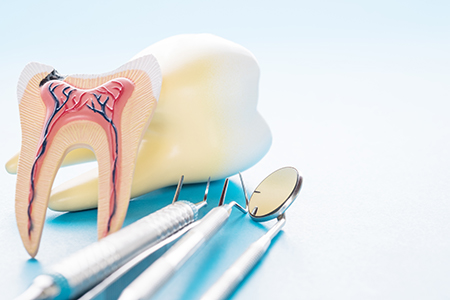
Teeth aren’t solid through-and-through; inside each one is a pulp chamber containing nerves and blood vessels that help a tooth develop and sense changes. When bacteria from deep decay, cracks, or traumatic injury reach this inner chamber, inflammation or infection can follow. That process is what often leads dentists to recommend root canal therapy.
Symptoms can vary. Some people experience intense, lingering pain with hot or cold, while others notice discomfort when biting or a dull ache that won’t go away. In some cases there may be no pain at all, and the problem is only visible on X-rays as changes around the root tip. Both painful and silent infections require professional evaluation.
Early diagnosis matters because the extent of damage inside the tooth influences treatment complexity. When detected while enough healthy tooth structure remains, root canal therapy can remove the infection and allow the tooth to be rebuilt reliably. Untreated infections can spread, causing more extensive problems for adjacent teeth and supporting bone.
Although not every ache means a root canal, common warning signs include the following:
Pain that lingers and intensifies — especially pain that awakens you at night or doesn’t respond to over-the-counter remedies — is a strong indicator that the tooth’s internal tissues may be compromised.
An exaggerated or lingering sensitivity to temperature changes can signal inflammation of the pulp. If cold or heat causes a strong, prolonged ache, it’s worth an exam sooner rather than later.
Discomfort with pressure often reflects inflammation or infection that affects the nerve or surrounding tissues. This sensation can make chewing difficult and should prompt evaluation.
Color changes — a tooth darkening to gray or brown — sometimes mean the internal tissues have deteriorated following trauma or advanced decay. Discoloration is a visual cue that the tooth’s health has changed.
Fractures or deep chips can expose the pulp or permit bacteria to enter. Even if a damaged tooth isn’t initially painful, it can become infected over time and require treatment to save it.
Swelling near a tooth or a draining sinus tract is a clinical sign of infection. These signs mean bacteria have moved beyond the pulp and that professional care is needed promptly.
If a tooth becomes mobile or your bite shifts, infection or bone loss around the root may be present. Root canal therapy can often arrest the problem when combined with appropriate restoration.

Delay can complicate what might otherwise be a straightforward treatment. As infection progresses, it can spread beyond the tooth into surrounding bone and soft tissue, making care more extensive and recovery longer. Addressing the problem early limits that spread and improves the chances of preserving the natural tooth.
Sometimes a problematic tooth shows no obvious symptoms and is first identified during a routine exam or on digital X-rays. Because radiographs reveal changes at the root tip before severe pain develops, regular dental checkups are an important safety net for catching issues while they remain manageable.
When root canal therapy is recommended, scheduling and attending treatment promptly protects your oral health and decreases the likelihood of emergency visits, additional procedures, or loss of the tooth. Timely care also reduces the risk that the infection could affect your overall well-being.
Today’s root canals are performed with patient comfort in mind. Local anesthesia numbs the area so you won’t feel pain during the procedure, and our team takes steps to minimize discomfort and anxiety. In many cases, the treatment is no more uncomfortable than receiving a filling.
The dentist carefully accesses the pulp chamber, removes infected or damaged tissue, and cleans and shapes the internal canals. These spaces are then filled with a biocompatible material to seal them against future contamination. The number of visits depends on the tooth’s anatomy and whether an active infection requires additional attention.
After the root canal itself, most teeth benefit from a protective permanent restoration — often a crown — to restore strength and function. Your dentist will discuss the timeline for final restoration and recommend the appropriate materials based on the tooth’s location and structural needs.
Recovery after root canal therapy is usually quick. Mild soreness for a few days is common as surrounding tissues heal; this is typically managed with over-the-counter pain relievers and short-term modifications to chewing. If antibiotics are prescribed for an active infection, it’s important to complete the full course.
Protecting the treated tooth while a permanent restoration is prepared is an important part of long-term success. Avoid chewing hard or sticky foods on the treated side until your dentist places a crown or other definitive restoration, and follow any temporary restoration care instructions provided.
With good oral hygiene and routine dental visits, a tooth that has undergone root canal therapy can function comfortably for many years. If you notice renewed pain, swelling, or other concerns after treatment, contact us so the situation can be evaluated without delay.
At Peace Haven Family Dentistry, our approach to root canal care emphasizes clear communication, careful technique, and individualized planning so each patient receives the most appropriate treatment for their situation. If you have questions about symptoms, diagnosis, or what to expect from treatment, please contact our office for more information.
Root canal therapy is a treatment that removes infected or damaged pulp from inside a tooth, seals the internal canals, and preserves the outer tooth structure. The procedure stops pain caused by inflammation or infection and prevents the problem from spreading to surrounding bone and soft tissues. Modern instruments and materials make the process predictable and focused on preserving natural teeth whenever feasible.
Saving a tooth with root canal therapy often maintains chewing function, supports neighboring teeth, and helps retain facial contours that can change after tooth loss. After the internal treatment, most teeth benefit from a protective permanent restoration such as a crown to restore strength and long-term function. Your dentist will evaluate the tooth and recommend the approach that best supports lasting oral health.
Common warning signs that may indicate the need for root canal therapy include persistent or worsening toothache, sharp reactions to hot or cold, tenderness when biting, and visible discoloration of a tooth. Swelling, drainage or a pimple-like bump on the gum and changes in tooth mobility can also signal an internal infection that requires professional care. Some teeth have no symptoms and are first identified as problematic on digital X-rays during a routine exam.
Because symptoms vary and some infections are silent, a thorough clinical exam and radiographs are necessary to confirm a diagnosis and determine the extent of damage. Early detection generally simplifies treatment and improves the chances of preserving the natural tooth. If you notice any of these signs or have unexplained dental pain, schedule an evaluation promptly.
Modern root canal treatment begins with local anesthesia to ensure comfort, followed by isolation of the tooth and careful access to the pulp chamber. The dentist cleans and shapes the internal canals using specialized instruments and irrigating solutions to remove bacteria and infected tissue, then fills and seals the canals with a biocompatible material. Advances such as rotary instruments, magnification, and digital imaging help improve precision and outcomes.
The procedure can often be completed in one visit, but the number of appointments depends on the tooth's anatomy and whether an active infection requires additional care. Once the internal treatment is finished, a permanent restoration—frequently a crown—is recommended to protect the tooth and restore full function. Your provider will explain the expected timeline and restoration plan based on your individual needs.
With modern techniques and effective local anesthesia, most patients experience little to no pain during the procedure, and many compare the sensation to having a routine filling placed. Dentists also use measures to reduce anxiety and enhance comfort throughout the visit. The goal is to remove the source of pain—the infected or inflamed pulp—so discomfort present before treatment is typically relieved.
After treatment, mild soreness or tenderness in the surrounding tissues is common for a few days and is usually managed with over-the-counter pain relievers and temporary changes in chewing. If unusual or severe pain, persistent swelling, or other concerning symptoms occur, contact the dental office for prompt evaluation. Completing any prescribed medications and following post-op instructions supports a smooth recovery.
Recovery after root canal therapy is generally quick, with most patients experiencing only mild soreness for two to three days as the surrounding tissues heal. Short-term pain is often controlled with nonprescription analgesics and by avoiding chewing on the treated side until a permanent restoration is placed. If an active infection was present, antibiotics may be prescribed and should be taken exactly as directed.
The treated tooth will require a final restoration to restore strength and long-term function, and scheduling that restoration promptly reduces the risk of fracture or reinfection. Follow-up visits allow the dentist to confirm healing and address any concerns. If you notice renewed pain, swelling, or persistent symptoms after treatment, contact the office for evaluation without delay.
When performed and followed by an appropriate restoration, root canal therapy has a high success rate and can allow a tooth to function comfortably for many years or even decades. Preserving the natural tooth helps maintain jawbone levels, prevents shifting of adjacent teeth, and avoids the additional procedures associated with extraction and replacement. The long-term outcome depends on factors such as the extent of preexisting damage, restoration quality, and ongoing oral hygiene.
Regular dental checkups and good home care are important for monitoring a treated tooth and detecting issues early. Protecting the tooth from excessive forces and restoring it with a durable crown when indicated further improves longevity. Your dentist will discuss realistic expectations for your specific tooth and outline measures to protect it over time.
Before treatment, let your dental team know about any medical conditions, medications, or allergies you have, and follow any preoperative instructions they provide. Maintaining routine oral hygiene and arriving with questions prepared helps ensure clear communication about the procedure and aftercare. If you have significant anxiety, discuss comfort options with your dentist so appropriate accommodations can be arranged.
After the procedure, follow instructions for caring for a temporary restoration, avoid hard or sticky foods on the treated side, and complete any prescribed medications. Schedule and attend the recommended follow-up appointment for final restoration so the tooth is fully protected. Contact the office if you experience severe pain, swelling that worsens, or any other unexpected symptoms.
Concerns that root canal therapy causes systemic health problems are not supported by contemporary scientific evidence; modern endodontic treatment is designed to remove infection and seal the tooth with biocompatible materials. Leaving a dental infection untreated can pose clear health risks, including spread of infection to surrounding tissues and, in rare cases, systemic complications. Treating the source of dental infection generally reduces health risks rather than creating them.
If you have specific medical conditions or immune-system concerns, discuss them with your dentist and your physician so the care plan can be adapted appropriately. The dental team will evaluate the overall risk and coordinate care when necessary. Open communication and proper treatment reduce the likelihood of complications related to oral infections.
Root canal therapy preserves the natural tooth by removing infected tissue while retaining the outer tooth structure, whereas extraction removes the tooth entirely. Saving the natural tooth often helps maintain jawbone volume and tooth alignment and typically avoids the additional surgeries and restorative work associated with replacing a missing tooth. The right choice depends on the tooth's condition, structural integrity, and the long-term prognosis for restoration.
When extraction is necessary, replacement options such as dental implants, bridges, or removable prostheses can restore function and appearance, but these alternatives involve separate procedures and planning. Your dentist will explain the benefits and limitations of each option and help you choose a treatment path that best fits your oral health goals. In many cases, when a tooth can be predictably saved, root canal therapy is the conservative, teeth-preserving choice.
Peace Haven Family Dentistry provides root canal care in a modern, patient-centered environment that emphasizes clear communication and gentle technique. The practice combines contemporary instruments and imaging with a focus on minimizing anxiety, so patients in Winston-Salem receive precise care aimed at relieving infection and preserving natural teeth. Dentists at the office review treatment options, expected timelines, and the plan for final restoration so each patient understands the steps involved.
The team coordinates care to ensure the treated tooth receives the protection it needs after endodontic therapy, often recommending restorative solutions that restore strength and function. Routine follow-up and preventive care help monitor healing and support long-term success. If you have questions about symptoms, diagnosis, or what to expect during treatment, contact the office to schedule a consultation.
Have a question or ready to schedule your visit? Send us a message and we'll be in touch, or call (336) 765-9247.